What changed
What changedIn the third quarter of 2026, which ended September 30, JFrog Ltd. reported revenue of $179.2 million, a 31% increase year-over-year. As of September 30, 2026, the company held $880.9 million in cash, cash equivalents and investments.

Deals & ownershipIn September and October 2026, four JFrog Ltd. executives sold some of their shares, while one top manager increased her holdings. Barry Zwarenstein, Frederic Simon, Yoav Landman, and Shlomi Ben Haim conducted planned open-market stock sales, while chief revenue officer Tali Notman acquired shares by exercising options.
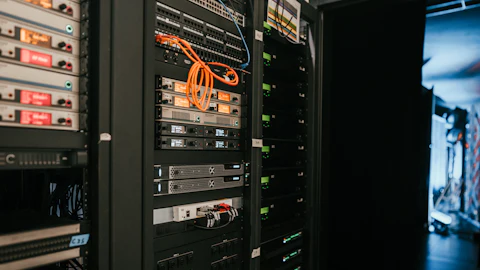
What changedJFrog expanded its AI Security platform to include automated scanning of AI assets for malicious intent and Shadow AI detection on developer workstations. These updates aim to provide centralized control and security policy enforcement for autonomous agents, plugins, and other AI tools used by developers.

What changedJFrog said Artifactory now supports LuaRocks, letting users create a private repository and cache public modules, and it can be started for free.
Company history
October 2026
JFrog Ltd: 12 recorded developments from 5 official sources in 2026-10.
- 2026-09-16: LuaRocks support in JFrog Artif allows users to host and proxy Lua modules from a private LuaRocks registry using the native experience, not a bolted-on workaround. Source
- 2026-09-16: JFrog Artifactory now supports LuaRocks as a native repository type with the same three-repo model approach used for Maven, npm, NuGet and other repositories. Source
- 2026-10-02: When implemented correctly, the centralized approach lets teams deliver faster release cycles while maintaining standards they can confidently present to regulators, customers, and the board. Source
- 2026-10-02: JFrog offers a platform where the software supply chain is integrated: artifacts, provenance, governance, dependencies, policy, and release paths are all part of a centralized, trusted, single system of record. Source
- 2026-10-02: As agents increasingly write, review, and release code, the control point must be the platform itself, including: Managing non-human entities, Ensuring verifiable provenance, Enforcing policy at pipeline speed, Maintaining an immutable build record. Source
- 2026-10-12: JFrog calls the mechanism that records and evaluates what agents do the Agentic Process Evidence Protocol. Source
- 2026-10-21: When a developer publishes a skill to their project's skills repository in JFrog Artifactory, JFrog Xray scans the bundle for physical dependencies and known CVEs, while JFrog AI Security's AI-powered scanner evaluates the instructions to return a classification of 'Not Malicious,' 'Susp Source
- 2026-10-21: Skills, plugins, and APM packages are stored inside the JFrog Platform alongside Docker images and npm packages under a unified permissions model and audit trail. Source
- 2026-10-21: JFrog AI Security previously detected Shadow AI in software supply chains by scanning AI models in JFrog Artifactory repositories and calls to external AI services in builds. Source
- 2026-10-21: Detection is enabled by installing the JFrog Agent Plugin on developer workstations, which runs a local rules-based scan and reports findings to the JFrog Platform. Source
- 2026-10-21: JFrog AI Security turns AI asset reports into a single unified inventory showing details including asset name, type, reporting harness, number of detected workstations, and local risk analysis. Source
- 2026-10-21: JFrog is a registered trademark of JFrog Ltd. in the United States. Source
Monthly records are drafted by AI from each month’s checked filings and official sources (in English, as extracted), with every line linked to its source; storylines group related developments across analyses using vector embeddings (Amazon Titan Text Embeddings V2). Provisional context, not investment advice.
Sector peers
How this company compares with 89 covered companies in Information Technology (median revenue change +20.6% YoY), from archived SEC XBRL filings.
Latest reported period per company from SEC CompanyFacts (XBRL). Fiscal calendars differ across companies.
Expectations and reality
Open
The company has issued an outlook for the fourth quarter and for the full year of 2026.
Said November 5, 2026 · Period named: fourth quarter and for the full year of 2026 · Source · Our article
Not yet checked against later reports.
What management said to expect (targets, plans, forecasts) in the company's own documents (in English, as extracted), with the date and the period it named. Assessments are written by AI from the company's later reports: provisional, not checked by an editor, and a consistent later report is not proof. An editor's decision replaces them.
Changes in risk factors
The 10-Q filed November 6, 2026 compared with the 10-Q filed August 7, 2026: risk paragraphs that were added or dropped, quoted as filed. SEC
Added (10)
- our ability to maintain the security and availability of our products, including risks arising from disclosed product vulnerabilities, exploitation by threat actors, and customers’ failure to implement available patches or mitigations promptly;
- affect our results of operations. Our failure to improve our systems, processes, and controls, or their failure to operate in the intended manner, may result in our inability to manage the growth of our business and to forecast our revenue, expenses, and earnings accurately, or to prevent losses.
- underlying performance of our business. Factors that may cause fluctuations in our quarterly financial results include, but are not limited to:
Dropped (11)
- our ability to maintain the security and availability of our products;
- We expect our revenue mix to vary over time due to a number of factors, including the mix of our subscriptions for self-managed and SaaS offerings, which may affect the timing and amount of revenue recognized and the associated costs. Further,
- Our products are often operated in large scale, complex IT environments. Our customers and some partners require training and experience in the proper use of and the benefits that can be derived from our products to maximize their potential. If users of
Found by comparing the two reports paragraph by paragraph, without AI. A new or dropped risk is not by itself a sign of trouble.
Insider trades
| Date | Person | Trade | Shares | Avg. price | Value | Filing |
|---|
| November 13, 2026 | Frederic Simon | Sale 10b5-1 plan notice filed | 40,000 | $111.21 | $4,448,579 | SEC |
| November 6, 2026 | Ben Haim Shlomi | Sale 10b5-1 plan | 15,000 | $97.42 | $1,461,277 | SEC |
| October 20, 2026 | Barry Zwarenstein | Sale 10b5-1 plan notice filed | 1,250 | $90.10 | $112,625 | SEC |
| October 7, 2026 | Ben Haim Shlomi | Sale 10b5-1 plan | 15,000 | $97.52 | $1,462,840 | SEC |
All insider trades →
Large funds (13F)
| Fund | Shares | Value | Change in shares | Quarter |
|---|
| BlackRock | 8,198,841 | $795,615,544 | +4.6% | Q3 2026 |
| Fidelity (FMR) | 2,979,395 | $289,120,504 | -6.5% | Q3 2026 |
| State Street | 2,224,107 | $215,827,343 | +1.9% | Q3 2026 |
| Geode Capital Management | 1,632,505 | $158,403,059 | +1.2% | Q3 2026 |
| Renaissance Technologies | 1,324,748 | $128,553,546 | -8.3% | Q3 2026 |
| Norges Bank (Norway's sovereign fund) | 1,348,331 | $122,536,321 | — | Q2 2026 |
| Two Sigma Investments | 1,064,340 | $103,283,554 | +62.7% | Q3 2026 |
| Wellington Management | 628,591 | $60,998,470 | -18.3% | Q3 2026 |
| Millennium Management | 114,222 | $11,084,103 | +28.9% | Q3 2026 |
| D. E. Shaw & Co. | 58,506 | $5,317,025 | — | Q2 2026 |
| Citadel Advisors | 28,006 | $2,545,185 | -97.7% | Q2 2026 |
| ARK Investment Management (Cathie Wood) | 25,182 | $2,443,661 | -50.3% | Q3 2026 |
| T. Rowe Price | 5,074,065 | $492,388 | +15.0% | Q3 2026 |
From the quarterly 13F-HR holdings reports of the large funds we follow, as filed. Funds file up to 45 days after the quarter ends, so positions may have changed since. Change: against the same fund's previous quarter. Not a recommendation.